You Wanna Talk About Firepower
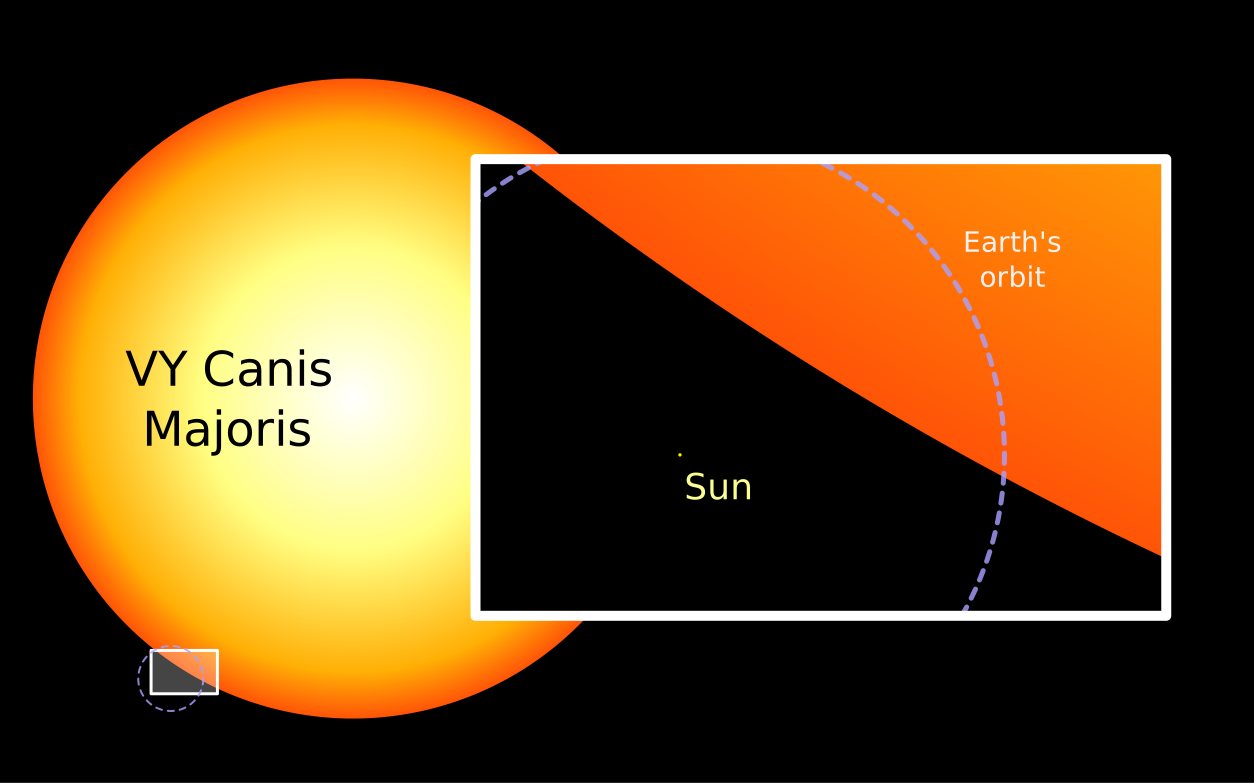
There exists, in the depths of space, a monster. A giant with an incredibly short, yet especially volatile life. A monster powerful enough to sterilize the surface of planets for hundreds of light years in its death-throws and even after death it leaves behind a lethal reminder of just how powerful it was. If you thought the sun was big, wait until you learn about the mighty VY Canis Majoris.
The star was first observed in 1801 by Jérôme Lalande, and until relatively recently many astronomers believed it to be a multiple star system, as they could not conceive of a single star so large. It wasn't until about 1957 that anyone was able to confirm that VY-CMa was a solitary star. Distance measurements were equally perplexing. Typically to find a stars distance we observe its position in the night sky at two separate dates, about six months apart. The distance its position has changed can be input into a equation to determine its distance trigonometrically. With VY-CMa though, this change, called the Parallax angle, is very small and thus for the longest time lead to a very broad range of possible distances. And in the case of this star, knowing how far way it is is very important, life and death of the human species as a whole important.
VY-CMa is classified as a hypergiant, meaning its larger than the most commonly taught "biggest star" the supergiant. At about 1420 solar radii, or 987,610,000 kilometers, flying at the speed of light it would take almost an hour to fly from its surface to its core, it would take less than a minute to do that in our sun. A star this size has problems though. To keep itself so huge it burns a lot more fuel than your average star like the sun, literally an Earth's mass of hydrogen and helium every few minutes. That means the star dies young, runs out of fuel faster. When a supergiant goes, we call it a supernova; a massive explosion as the core collapses and all the outer layers of the star are blown outward in one of the most violent outbursts of energy in the known Universe. 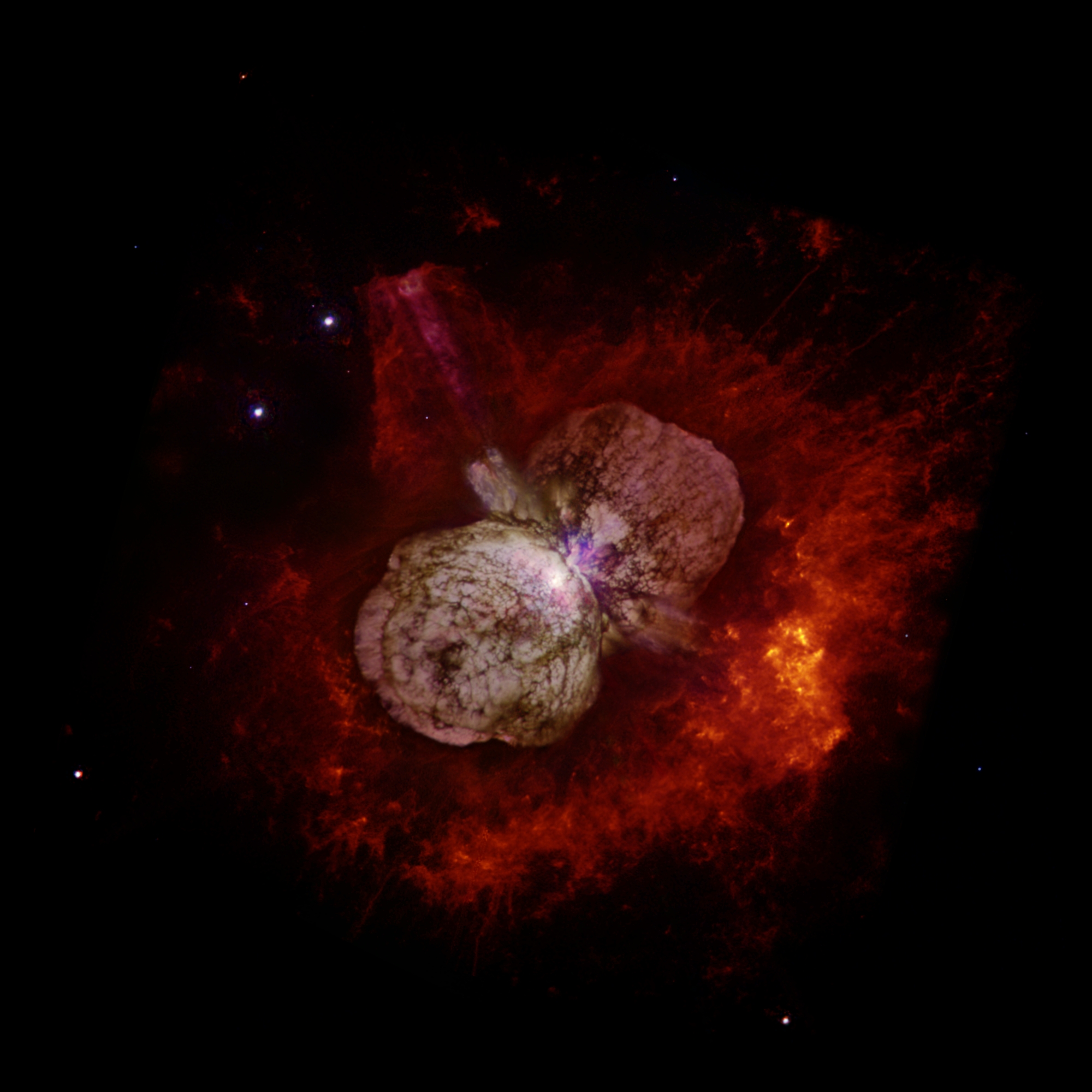
But when a hypergiant goes, its a whole new ballpark. A hypernova makes you're average supernova look like a sparkler. The core and most of the inner layers of the star almost instantly collapse into a massive black hole. As the inner layers begin to collapse in on the black hole, it becomes overwhelmed by the sheer amount of mass it's trying to devour and starts releasing a ridiculous spectrum of gamma rays and various forms of Hawking Radiation. These waves carry outward on the huge mass of star layers that didn't get sucked into the core and travel outward. Models suggest that if VY-CMa went hypernova right now it would steralize every planet within 100 light years. Lucky for us, we sit pretty at about 4000 light years. When VY-CMa goes, quite possibly within our lifetime, we might get a bit more radiation than any other average day, but we'll be fine, and a new star will appear in the night, and day. The last time anyone on Earth observed a supernova was the Chinese centuries back, it was said to have outshone Sol even in the day. Imagine what a hypergiant could do.

If you highlight the text it will make the white go away. I've spent the past hour trying to fix it, I'm done.
ReplyDeletelol, Interesting! I always find things like this very fascinating. Great blog!
ReplyDelete